
Flask
1840–60
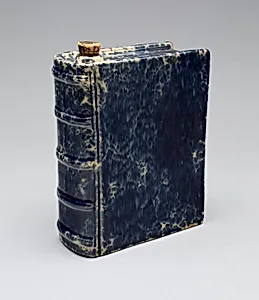
Medium
Earthenware
Dimensions
17.8 × 6 × 14 cm (7 × 2 3/8 × 5 1/2 in.)
Classification
vessel
Department
Arts of the Americas
Museum
Art Institute of Chicago
Accession Number
92239
Rights
Public Domain
Art Historical Context
This unassuming earthenware flask, between 1840 and 1860 by an unknown artist, exemplifies the practical artistry of everyday life in 19th-century America. Measuring a compact 17.8 × 6 × 14 cm, its simple, bulbous form with a narrow neck was designed for portability, ideal for carrying whiskey, water, or other liquids during travel, work, or leisure. Housed in the Art Institute of Chicago's Arts of the Americas department and classified as a vessel, it reflects the utilitarian pottery traditions that thrived in rural workshops across the United States. Earthenware, made from low-fired clay, was a humble yet versatile medium prized for its affordability and workability. Potters shaped it by hand or on a wheel, often glazing it sparingly to enhance durability and add subtle color. This flask's survival highlights the skill of anonymous makers who blended function with subtle aesthetic appeal—perhaps featuring molded details or regional motifs that spoke to local pride. Today, such objects elevate vernacular craft to museum status, offering a window into the daily rhythms of antebellum America. They remind us that beauty often emerged from necessity, preserving stories of labor, migration, and community in tangible clay.