
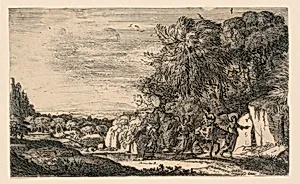
Flight into Egypt
ca. 1630–1631
Classification
landscapes
Department
Smithsonian Collection
Museum
Smithsonian American Art Museum
Credit
Bequest of George Campbell Cooper
Accession Number
1896-3-128
Rights
Public Domain
About this artwork
Research in Progress
Art Historical Context
Claude Lorrain's *Flight into Egypt* (. 1630–1631) captures a pivotal biblical moment from the Gospel of Matthew: the Family's hurried escape from King Herod's massacre of the innocents. Painted early in Lorrain's career, this landscape exemplifies the French artist's mastery of luminous, idealized scenery, blending serene natural beauty with subtle narrative drama. Though the medium remains under study, its classification as a landscape highlights Lorrain's signature focus on expansive vistas bathed in golden light. Working primarily in Rome during the Baroque era, Lorrain drew inspiration from classical antiquity and the Italian countryside, creating poetic scenes that influenced generations of landscape painters—from Turner to the Hudson River School. His technique emphasized atmospheric perspective, with distant hills and shimmering skies evoking a sense of divine tranquility amid peril, a hallmark of his "Lorrainesque" style. Bequeathed to the Smithsonian American Art Museum by George Campbell Cooper, this work invites visitors to ponder how Lorrain transformed a tense flight into a harmonious vision of hope and refuge. Ongoing research promises deeper insights into its creation and provenance, enriching our appreciation of 17th-century European art's enduring allure.