
Flintlock Gun
Unknown Artist
17th–18th century
Medium
Iron, wood (likely mahogany), silver, brass, ivory
Dimensions
L. 87 1/4 in. (221.6 cm); L. of barrel 73 3/4 in. (187.3 cm); Cal. .53 in. (13.5 mm); Wt. 11 lb. 2 oz. (5046 g)
Classification
Firearms
Culture
Sri Lankan
Department
Arms and Armor
Museum
Metropolitan Museum of Art, New York, NY
Credit
Edward C. Moore Collection, Bequest of Edward C. Moore, 1891
Accession Number
91.1.907
Rights
Public Domain
Art Historical Context
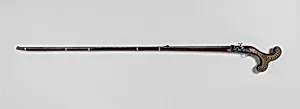
This stunning flintlock gun 17th–18 century Sri Lanka exemplifies the fusion of functionality and artistry in Southeast Asian arms-making. Crafted from iron for the long, 73¾-inch barrel, with a stock likely of rich mahogany, it is embellished with silver, brass, ivory—materials that elevate it beyond a mere weapon into a luxurious object. Measuring nearly 7½ feet in length and weighing over 11 pounds, its scale reflects the power and presence of muskets used in warfare, hunting, or ceremonial displays during a time of European colonial influence on the island. In Sri Lankan culture, such firearms emerged amid interactions with Portuguese, Dutch, and British traders, blending local craftsmanship with imported European technology. The flintlock mechanism, which sparked powder via flint striking steel, represented cutting-edge firepower of the era. The intricate inlays of precious metals and ivory highlight the gunsmith's skill, suggesting this piece belonged to nobility or high-ranking warriors, symbolizing status as much as martial prowess. Housed in the Metropolitan Museum of Art's Arms and Armor Department, this gun from the Edward C. Moore Collection invites us to ponder the artistry hidden in history's tools of conflict.