
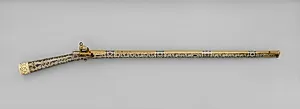
Flintlock Rifle
Unknown Artist
ca. 1800–1850
Medium
Steel, silver, niello, gold, ivory
Dimensions
L. 52 in. (132.08 cm); Cal. .56 in. (14.22 mm)
Classification
Firearms-Guns-Flintlock
Culture
Caucasian, Kubachi, Dagestan
Department
Arms and Armor
Museum
Metropolitan Museum of Art, New York, NY
Credit
Rogers Fund, 1931
Accession Number
31.35.2
Rights
Public Domain
Art Historical Context
This exquisite flintlock rifle, crafted around 1800–1850 in Kubachi, Dagestan, the masterful metalworking traditions of the Caucasian region. Housed in the Metropolitan Museum of Art's and Armor Department (acquired through the Rogers Fund in 1), it measures an impressive 52 inches in length with a .56-inch caliber, blending lethal functionality with stunning artistry. Kubachi silversmiths were renowned the Caucasus for transforming weapons into status symbols, reflecting the turbulent history of tribal warfare and prestige in 19th-century Dagestan. The rifle's steel barrel is richly adorned with silver, gold, niello—a dramatic black metallic alloy inlaid for contrast—and ivory inlays, showcasing techniques passed down through generations. These materials not only enhanced durability but also conveyed wealth and skill; intricate engravings and filigree likely depict geometric patterns or motifs symbolizing protection and power, turning a tool of conflict into wearable art. As a prime example of Caucasian firearm decoration, this piece highlights how arms served as cultural canvases, bridging utility and aesthetics in a region of resilient mountain warriors. Visitors will appreciate its dual role: a relic of history and a testament to enduring craftsmanship.