
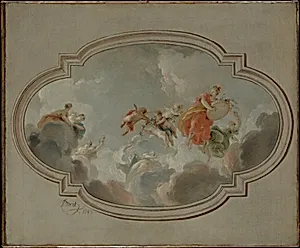
Flora and Zephyr
1743
Medium
Oil on canvas
Dimensions
20 7/8 x 24 7/8 in. (53 x 63.2 cm)
Classification
Paintings
Department
European Paintings
Museum
Metropolitan Museum of Art, New York, NY
Credit
Gift of J. Pierpont Morgan, 1906
Accession Number
07.225.301
Rights
Public Domain
Tags
Art Historical Context
In the enchanting *Flora and Zephyr (1743), Dutch artist Jacob de Wit captures a whimsical moment from classical mythology. Flora, the Roman goddess of flowers and spring, is playfully entwined with Zephyr, the gentle west wind, amid a lively scene featuring graceful women and frolicsome putti—those cherubic figures symbolizing love and innocence. in oil on canvas, this work (20 7/8 x 24 7/8 in.) showcases de Wit's mastery of Rococo elegance, a style that flourished in 18th-century Europe with its soft curves, pastel hues, and celebration of nature's joys. De Wit, a prominent Amsterdam painter influenced by Rubens and the Baroque, adapted these traditions into lighter, more decorative Rococo compositions, often gracing palaces and private homes. The oil medium allowed him to layer luminous colors and delicate textures, evoking the breeze's caress and floral abundance—a perfect metaphor for renewal and romance. This piece reflects the era's fascination with mythological escapism amid Enlightenment optimism. A generous gift from J. Pierpont Morgan in 1906, *Flora and Zephyr* now graces the Metropolitan Museum of Art's European Paintings department, inviting visitors to bask in its timeless charm and the enduring allure of spring's eternal dance.
About the Artist
Jacob de Wit · 1695–1754
Comment on works: Religious; Allegory; Bas-relief