
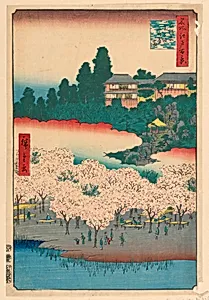
Flower Pavilion, Dango Hill, Sendagi (Sendagi, Dango-zaka Hana-yashiki) From the Series One Hundred Famous views of Edo
Classification
Department
Smithsonian Collection
Museum
Smithsonian American Art Museum
Credit
Gift of the Estate of Mrs. Robert H. Patterson
Accession Number
1941-31-274
Rights
Public Domain
About this artwork
Research in Progress
Art Historical Context
**Flower Pavilion, Dango Hill Sendagi** (from the series *One Hundred Famous Views of*), created by Ando Hiroshige in 1856, a vibrant slice of everyday life in mid-19th-century Japan. Hiroshige (1797–1858), a master of uki-e woodblock prints, produced this series toward the end of his career, depicting over 100 iconic sites in Edo (modern-day Tokyo). This print highlights the Flower Pavilion on Dango Hill the Sendagi neighborhood, a popular spot for cherry blossom viewing and leisure amid the bustling urban landscape of the Edo period. As a color woodblock print—a hallmark of ukiyo-e artistry—Hiroshige's work showcases his genius for atmospheric perspective, subtle color gradients, and dynamic compositions that blend people, nature, and architecture. The series, printed between 1856 and 1859, reflects a fading world of samurai culture and seasonal pleasures just before Japan's rapid modernization during the Meiji Restoration. These prints were affordable and widely circulated, bringing famous views to the masses. Today, housed in the Smithsonian American Art Museum as a gift from the Estate of Mrs. Robert H. Patterson, this piece invites us to stroll virtual paths of old Edo, evoking the transient beauty celebrated in Japanese art. Hiroshige's enduring influence bridges East and West, offering timeless insight into a thriving metropolis.