
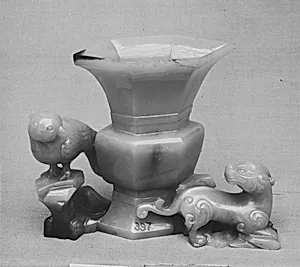
Flower vase
Unknown Artist
Medium
Nephrite, pale yellow of waxy aspect tinged in places with light brown
Dimensions
H. 3 1/4 in. (8.3 cm); W 4 1/4 in. (10.8 cm); L. 1 3/4 in. (4.4 cm)
Classification
Jade
Culture & Period
China · Ming dynasty (1368–1644)
Department
Asian Art
Museum
Metropolitan Museum of Art, New York, NY
Credit
Gift of Heber R. Bishop, 1902
Accession Number
02.18.397
Rights
Public Domain
Tags
Art Historical Context
This delicate flower vase, crafted from pale yellow nephrite jade with a waxy luster and subtle light brown tinges, exemplifies the refined artistry of Ming dynasty China (1368–4). Standing just 3¼ inches tall (8.3 cm), with a width of 4¼ inches (10.8 cm) and length of 1¾ inches (4.4 cm), its petite scale suggests it was designed for intimate display, perhaps on a scholar's desk or altar. Nephrite, one of China's most prized jades, was laboriously carved to reveal its translucent beauty, a technique perfected over centuries that demanded exceptional skill to avoid flaws in the hard stone. In Ming culture, jade symbolized purity, immortality, and moral virtue, making objects like this vase cherished status symbols among the elite. The surface likely features intricate carvings of birds and animals—common motifs evoking harmony, prosperity, and the natural world, as hinted by its classification. These designs reflect Confucian ideals of balance and the imperial court's fascination with naturalistic forms, blending utility with profound symbolism. A gift to the Metropolitan Museum of Art from Heber R. Bishop in 1902, this vase offers a window into Ming opulence, inviting visitors to appreciate the stone's subtle glow and the carver's masterful touch.