
Flowers from Nouvelle Suite de Cahiers de Fleurs idéales a l'usage des dessinateurs et des peintres
1790–99
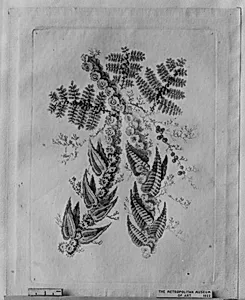
Medium
Etching, inked à la poupée
Dimensions
Plate: 7 11/16 × 5 7/16 in. (19.5 × 13.8 cm) Sheet: 8 7/8 × 6 7/8 in. (22.5 × 17.5 cm)
Classification
Prints
Department
Drawings and Prints
Museum
Metropolitan Museum of Art, New York, NY
Credit
Rogers Fund, 1921
Accession Number
21.91.16
Rights
Public Domain
Tags
Art Historical Context
This delicate etching, *Flowers* from Jean Pillement's *Nouvelle Suite de Cahiers Fleurs idéales a'usage des dessinateurs des peintres* (New Suite of Notebooks of Flowers for the Use of and Painters), dates to 1790–99. Created during the late Rococo to early Neoclassical transition in France, it reflects Pillement's renowned style of ornate, fantastical floral motifs, often inspired by nature but idealized for decorative purposes. Collaboratively printed with Anne Allen, this work served as a practical pattern book, offering artists and designers ready-to-use compositions for textiles, wallpapers, and furnishings amid the era's booming ornamental arts. The medium—etching inked *à la poupée*—is a highlight of printmaking ingenuity. Ink was meticulously applied by hand using rag "dolls" on sticks, allowing vibrant, multi-colored effects without separate plates for each hue. This technique produced subtle tonal variations and a painterly quality in small-scale prints like this one (plate: 7 11/16 × 5 7/16 in.), making it both accessible and luxurious. Housed in the Metropolitan Museum of Art's Drawings and Prints department (Rogers Fund, 1921), it exemplifies 18th-century Europe's fascination with floral ornamentation, bridging fine art and applied design. Visitors will appreciate its timeless elegance, a window into how "ideal flowers" fueled creativity across crafts.
About the Artist
Jean Pillement|Anne Allen · 1728–1808
**Jean-Baptiste Pillement (also known as Jean Pillement)** was a French painter, designer, and engraver born on 24 May 1728 in Lyon, where he also died on 26 April 1808. He became one of the most influential decorative artists of the Rococo period, celebrated for his delicate landscapes and exotic chinoiserie designs that spread across Europe through prints and decorative applications. Pillement ...