
Folding armchair
Unknown Artist
16th century
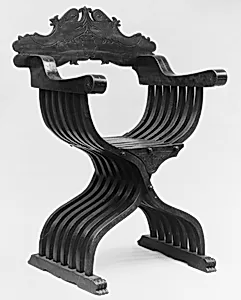
Medium
Carved walnut
Dimensions
43-3/4 x 28-1/2 x 15-1/2 in. (111.1 x 72.4 x 39.4 cm)
Classification
Woodwork-Furniture
Culture
Italian (Tyrolese or North Italian)
Department
European Sculpture and Decorative Arts
Museum
Metropolitan Museum of Art, New York, NY
Credit
The Friedsam Collection, Bequest of Michael Friedsam, 1931
Accession Number
32.100.326
Rights
Public Domain
Art Historical Context
Step into the Renaissance elegance of 16th-century Italy with this striking folding armchair, crafted from richly carved walnut. Hailing from the Tyrolese or North Italian—straddling the Alps where Italian and Germanic influences mingled—this piece exemplifies the era's masterful woodwork. Measuring a substantial 43-3/4 x 28-1/2 x 15-1/2 inches, its portable folding design made it ideal for nobility on the move, collapsing for travel while unfolding into a throne-like seat for courts or grand homes. Walnut, prized for its fine grain and durability, was a favored medium for Renaissance carvers, allowing intricate details that showcased virtuoso craftsmanship. Though the artist's name is lost to time, the chair reflects the period's fusion of function and opulence, where furniture doubled as sculpture. Folding armchairs like this symbolized status, evoking the mobile lifestyles of Renaissance elites amid Italy's thriving trade and patronage. Today, this gem from The Friedsam Collection graces the Metropolitan Museum of Art's European Sculpture and Decorative Arts department, a bequest from Michael Friedsam in 1931. It invites us to ponder the everyday artistry of bygone eras, blending utility with timeless beauty.