
Folding fan
19th century
Medium
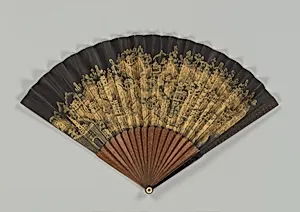
Folding fan; paper and wood
Dimensions
11 3/8 x 19 1/2 in. (28.9 x 49.5 cm)
Classification
Paintings
Culture & Period
China · late Qing dynasty (1644–1911)
Department
Asian Art
Museum
Metropolitan Museum of Art, New York, NY
Credit
Gift of Laurent Oppenheim Jr., in memory of Laurent and Amy Oppenheim, 1964
Accession Number
64.273.19
Rights
Public Domain
Art Historical Context
This delicate folding fan from late 19th-century China exemplifies the refined artistry of the Qing dynasty (1644–1), a period when traditional crafts blended elegance with everyday utility. Crafted from paper mounted on wooden sticks, it measures 11⅜ × 19½ inches (28.9 × 49.5 cm) when open, making it a portable treasure for scholars, officials, or affluent women. Classified as a painting in the Metropolitan Museum of Art's Asian Art collection, the fan's paper surface likely served as a canvas for intricate brushwork, showcasing the era's mastery of ink and color on fragile supports. In Qing culture, folding fans like this were more than accessories—they symbolized sophistication and were essential for fanning away summer heat while displaying poetic or pictorial motifs during social gatherings. The unidentified artist's technique highlights the precision of Chinese fan-making: lightweight paper glued to rigid wood guards, allowing the fan to fold compactly for carrying in sleeves. Gifted to the Met in 1964 by Laurent Oppenheim Jr. in memory of his parents, this piece offers a glimpse into the dynasty's waning years, when such objects bridged art, fashion, and personal expression amid political upheaval. (198 words)