
Folio from a Qur'an Manuscript
dated A.H. 531/ 1137 CE
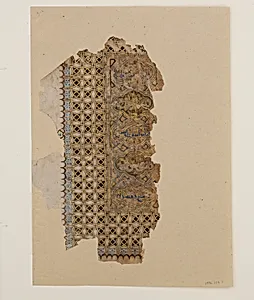
Medium
Ink, gold, and opaque watercolor on paper
Dimensions
H. 8 1/2 in. (21.6 cm) W. 4 13/16 in. (12.2 cm)
Classification
Codices
Department
Islamic Art
Museum
Metropolitan Museum of Art, New York, NY
Credit
Louis E. and Theresa S. Seley Purchase Fund for Islamic Art and Rogers Fund, 1996
Accession Number
1996.294.7
Rights
Public Domain
Tags
Art Historical Context
This exquisite folio from a Qur'an manuscript, created by the calligrapher Muhammad al-Zanjani in 1137 CE, exemplifies the profound reverence for sacred text in Islamic tradition. Measuring just over eight inches tall, the page features elegant Arabic script rendered in ink, accented with gold and opaque watercolor. As part of a complete codex, it would have formed one leaf in a bound volume intended for study or recitation, highlighting the central role of the Qur'an in daily spiritual life during the medieval period. Al-Zanjani, likely working in Persia, contributed to a golden age of manuscript production when calligraphy was celebrated as the highest art form. The use of gold illumination not only beautified the page but also symbolized divine light, drawing the reader's eye to key verses. Such techniques required immense skill, as artists balanced precise lettering with decorative elements while adhering to aniconic principles that favored abstract and geometric designs over figurative imagery. Today housed in the Metropolitan Museum of Art's Islamic Art collection, this folio offers a window into 12th-century cultural exchange across the Islamic world. Its survival speaks to the enduring value placed on preserving these texts, inviting modern viewers to appreciate both their spiritual depth and artistic mastery.