
Fragment
Late Fatimite (969–1171 CE)/ Ayyubid period (1171–1250), 11th/13th century
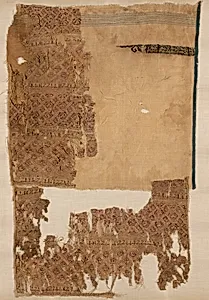
Medium
Linen and wool, slit tapestry weave
Dimensions
61 × 39.4 cm (24 × 15 1/2 in.)
Classification
textile
Department
Textiles
Museum
Art Institute of Chicago
Accession Number
57137
Rights
Public Domain
Art Historical Context
This exquisite textile fragment, dating to the late Fatimid (969–1171 CE) or Ayyubid (1171–1250) period in 11th- or 13th-century Egypt, offers a glimpse into the opulent world of medieval Islamic craftsmanship. The Fatimids, a Shia Ismaili dynasty, ruled from Cairo, fostering a golden age of arts and sciences, while the succeeding Ayyubids, under leaders like Saladin, continued this legacy amid Crusader conflicts. Such fragments, often surviving from larger garments or furnishings, highlight Egypt's role as a textile powerhouse, exporting luxurious fabrics across the Islamic world and beyond. Crafted in linen and wool using slit tapestry weave—a technique where colored weft yarns are woven side-by-side to form motifs, creating characteristic slits along color boundaries—this 61 × 39.4 cm piece exemplifies technical precision. The method allowed for vibrant, intricate patterns without complex looms, making it ideal for portable luxury goods like tiraz (inscribed bands on robes) or tirma (curtains). Its survival underscores the fragility and rarity of these artifacts, preserved through careful museum stewardship at the Art Institute of Chicago. In a virtual gallery, this fragment invites us to marvel at everyday artistry: textiles were status symbols, woven with dyes from indigo, madder, and saffron, blending utility with cultural splendor in a vibrant era of exchange.
About the Artist
Unknown
The artist designated as "Unknown" in our virtual museum's collection exemplifies a poignant chapter in art history: creators whose identities have faded into obscurity despite the enduring power of their work. With only one known artwork attributed to them in our holdings, this figure represents countless anonymous hands that shaped visual culture across centuries. Museums worldwide, including th...