
Folios from a Qur'an Manuscript
Unknown Artist
14th century
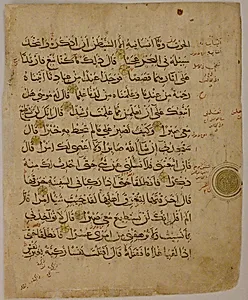
Medium
Ink, opaque watercolor, and gold on paper
Classification
Codices
Department
Islamic Art
Museum
Metropolitan Museum of Art, New York, NY
Credit
Purchase, Ehsan Yarshater Gift, 1975
Accession Number
1975.29.2
Rights
Public Domain
Art Historical Context
These exquisite folios from a th-century Qur'an manuscript the pinnacle of Islamic calligraphy and illumination. Crafted by an unknown artist ink, opaque watercolor, gold on paper, they part of a codex—a bound book format that revolutionized the preservation and dissemination of sacred texts during the medieval Islamic world. Housed in the Metropolitan Museum of Art's Islamic department (Purchase, Ehsan Yarshater Gift, 1975), these pages invite visitors to marvel at the reverence embedded in every stroke. The artistry shines through the masterful use of ink for flowing Arabic script, likely in a classic style such as Kufic or naskh, which balanced readability with aesthetic beauty. Gold leaf and vibrant opaque watercolors create luminous geometric and floral motifs, framing the verses of the Qur'an—the holy book of Islam. This medium was ideal for durability and portability, allowing manuscripts to be cherished in mosques, madrasas, and private libraries across the Persianate and Ottoman realms. In the 14th century, amid the flourishing of Islamic scholarship under dynasties like the Ilkhanids, such Qur'ans were not mere books but cultural treasures symbolizing faith, piety, and artistic innovation. They remind us how scribes and illuminators elevated the divine word into visual poetry, bridging spirituality and craftsmanship for generations.