
Foot of a Vessel
Unknown Artist
11th–12th century
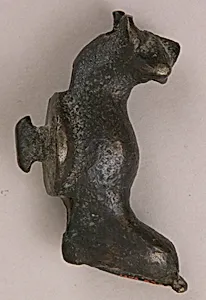
Medium
Bronze; cast, chased, and pierced
Dimensions
H. 2 1/2 in. (6.4 cm) W. 1 11/16 in. (4.3 cm) D. 15/16 in. (2.4 cm) Wt. 1.9 oz. (53.9 g)
Classification
Metal
Department
Islamic Art
Museum
Metropolitan Museum of Art, New York, NY
Credit
Anonymous Gift, 1973
Accession Number
1973.338.2
Rights
Public Domain
Art Historical Context
Nestled in the Metropolitan Museum of Art's Islamic collection, this delicate "Foot of a Vessel" the 11th–12th century exemplifies the exquisite metalworking traditions of the medieval Islamic world. Crafted from bronze, the small base—standing just 2½ inches tall and weighing under 2 ounces—was meticulously cast to form its shape, then refined through chasing (hammering fine details into the surface) and piercing (cutting intricate openwork patterns). These techniques highlight the artisan's mastery, creating a lightweight yet sturdy support that likely elevated a larger vessel like an ewer or basin used for ritual washing or serving. During the golden age of Islamic craftsmanship, such objects were prized for their functionality blended with artistry, often featuring motifs that evoked nature or geometry while adhering to aniconic principles. The pierced decoration would have allowed light to dance through, enhancing the vessel's beauty in lamplit interiors of palaces or mosques. Though the artist remains unknown, this anonymous gift from 1973 preserves a fragment of everyday luxury, revealing how bronze vessels circulated along trade routes from Persia to the Mediterranean. Today, this tiny foot invites us to ponder the lives of its makers—skilled smiths whose innovations influenced global metal arts for centuries. A testament to enduring elegance in the Islamic tradition.