
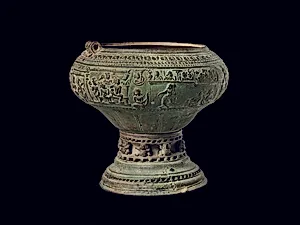
Footed Bowl with Scenes from the Gauttila Jataka
Unknown Artist
ca. 5th–6th century
Medium
Copper alloy
Dimensions
H. 8 1/4 in. (21 cm); Diam. 8 3/4 in. (22.2 cm)
Classification
Metalwork
Culture
Southern India, probably Andhra Pradesh
Department
Asian Art
Museum
Metropolitan Museum of Art, New York, NY
Credit
Rogers Fund, 1975
Accession Number
1975.419
Rights
Public Domain
Tags
Art Historical Context
This elegant footed bowl, crafted from copper alloy in southern India—likely Andhra Pradesh—around the 5th–6th century, exemplifies the Andhra period's masterful metalwork. Standing 8¼ inches tall and 8¾ inches in, its sturdy pedestal base and wide rim make it both functional for rituals or daily use and a canvas for storytelling. The exterior is adorned with lively repoussé scenes from the *Gauttila Jataka*, a tale from the Buddha's previous lives, featuring dynamic human figures, elephants, horses, and dancers in spirited procession. In the vibrant Buddhist culture of ancient Andhra, Jataka narratives like this one served to teach moral lessons, blending entertainment with devotion. Copper alloy, prized for its malleability and golden sheen, allowed artisans to hammer, chase, and engrave intricate details, capturing motion and emotion with remarkable vitality. This piece reflects the region's flourishing trade and craftsmanship, where metal vessels bridged the sacred and secular. Today, at The Metropolitan Museum of Art (Rogers Fund, 1975), it offers a rare glimpse into everyday artistry, highlighting how Andhra makers transformed humble objects into windows on spiritual tales. Visitors, imagine sipping from a bowl alive with ancient drama!