
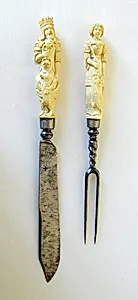
Fork
ca. 1600–1700
Classification
cutlery
Department
Smithsonian Collection
Museum
Smithsonian American Art Museum
Credit
The Robert L. Metzenberg Collection, gift of Eleanor L. Metzenberg
Accession Number
1985-103-176-c
Rights
Public Domain
About this artwork
Research in Progress
Art Historical Context
Step into the refined world of 17th-century table manners with this intriguing *Fork* from the Smithsonian American Art's collection. Dating to circa 1600–0 and classified as cutlery, piece hails from an era when forks were transitioning from exotic novelties to symbols of sophistication. Introduced to Europe from the Byzantine East and popularized in Italy during the Renaissance forks began appearing in wealthier American colonial households by the late 1600s, marking a shift from knife-and-spoon dominance at the dinner table. Though the artist and medium remain unknown—befitting utilitarian objects of the time—this fork exemplifies the craftsmanship of early modern silver- or metalwork, likely featuring two or three tines for piercing food. Its presence in the Smithsonian underscores everyday artifacts' role in storytelling, revealing how dining etiquette evolved alongside colonial prosperity and transatlantic trade. Generously gifted through The Robert L. Metzenberg Collection by Eleanor L. Metzenberg, this item awaits further research, inviting us to ponder the hidden artistry in humble tools. A reminder that history often hides in the silverware drawer! (178 words)
About the Artist
Unknown
The artist designated as "Unknown" in our virtual museum's collection exemplifies a poignant chapter in art history: creators whose identities have faded into obscurity despite the enduring power of their work. With only one known artwork attributed to them in our holdings, this figure represents countless anonymous hands that shaped visual culture across centuries. Museums worldwide, including th...