
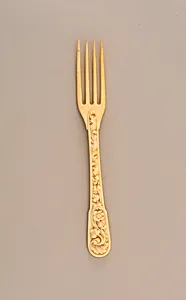
Fork
ca. 1750
Classification
cutlery
Department
Smithsonian Collection
Museum
Smithsonian American Art Museum
Credit
The Robert L. Metzenberg Collection, gift of Eleanor L. Metzenberg
Accession Number
1985-103-194
Rights
Public Domain
About this artwork
Research in Progress
Art Historical Context
This elegant fork, dating to around 1750, hails from the colonial era of American history, a time when everyday utensils began to reflect growing sophistication in domestic life. As part of the Smithsonian American Museum's collection of decorative arts, it exemplifies the craftsmanship of early American cutlery, likely produced by skilled artisans in a period of expanding trade and European influences. Forks, once a novelty among the elite, were gaining popularity by the mid-18th century,izing refined table manners and the blending of practicality with subtle artistry. Though the artist and exact medium remain under research, this piece from The Robert L. Metzenberg Collection—generously gifted by Eleanor L. Metzenberg—offers a window into 18th-century material culture. Such objects highlight how functional items doubled as status symbols, with potential hallmarks of silver, pewter, or bone handles showcasing regional workshops. Its presence in the Smithsonian underscores the museum's commitment to preserving humble yet historically vital artifacts that tell stories of daily life. Visitors are invited to ponder its journey through generations, as ongoing research promises to uncover more about its origins and makers. A simple fork, yet a timeless testament to colonial ingenuity!
About the Artist
Unknown
The artist designated as "Unknown" in our virtual museum's collection exemplifies a poignant chapter in art history: creators whose identities have faded into obscurity despite the enduring power of their work. With only one known artwork attributed to them in our holdings, this figure represents countless anonymous hands that shaped visual culture across centuries. Museums worldwide, including th...