
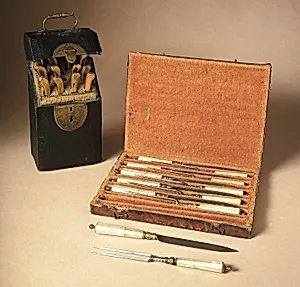
Fork
ca. 1720–40
Classification
cutlery
Department
Smithsonian Collection
Museum
Smithsonian American Art Museum
Credit
The Robert L. Metzenberg Collection, gift of Eleanor L. Metzenberg
Accession Number
1985-103-279-l
Rights
Public Domain
About this artwork
Research in Progress
Art Historical Context
This elegant fork, dating to approximately 1720–40, hails from the colonial American period, a time when everyday utensils like cutlery began reflecting growing sophistication in household goods. Classified as cutlery and housed in the Smithsonian American Art's Smithsonian Collection, it exemplifies the craftsmanship of early American metalworkers, though the specific artist and medium remain unidentified amid ongoing research. Forks were still a relative novelty in the American colonies during era, transitioning from European elite tableware to symbols of refined dining among the emerging merchant class. This piece, part of The Robert L. Metzenberg Collection generously gifted by Eleanor L. Metzenberg, likely showcases the period's blend of functionality and subtle ornamentation, highlighting how ordinary objects carried cultural weight. As research progresses, this fork invites us to ponder the intimate stories of colonial life—meals shared, tables set, and the quiet evolution of American material culture. A testament to history's everyday artistry!
About the Artist
Unknown
The artist designated as "Unknown" in our virtual museum's collection exemplifies a poignant chapter in art history: creators whose identities have faded into obscurity despite the enduring power of their work. With only one known artwork attributed to them in our holdings, this figure represents countless anonymous hands that shaped visual culture across centuries. Museums worldwide, including th...