
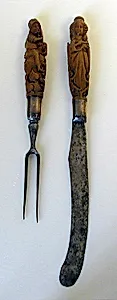
Fork with Figural Carved Wood Handle
ca. 1700
Medium
cutlery
Classification
cutlery
Department
Smithsonian Collection
Museum
Smithsonian American Art Museum
Credit
The Robert L. Metzenberg Collection, gift of Eleanor L. Metzenberg
Accession Number
1985-103-50
Rights
Public Domain
About this artwork
Research in Progress
Art Historical Context
Step into the early 18th century with this charming *Fork with Figural Carved Wood Handle*, crafted around 1700 by an unknown artisan. Housed in the Smithsonian American Art Museum as part of The Robert L. Metzenberg Collection, this piece exemplifies the blend of functionality and folk artistry in everyday objects from colonial America. Forks were still a relatively novel table utensil at the time, transitioning from elite status symbols to more common household items, often handmade by skilled woodworkers. The standout feature is its intricately carved wooden handle, adorned with figural motifs that likely depict human or animal forms— a testament to the carver's talent in transforming humble materials into decorative treasures. Wood carving was a accessible yet expressive medium in the 1700s, allowing rural craftsmen to infuse personality into utilitarian cutlery. This fork reflects the era's growing emphasis on refined dining etiquette, where even simple tools carried artistic flair. Though research continues, this artifact offers a glimpse into pre-industrial craftsmanship, highlighting how ordinary people elevated daily life through subtle artistry. A delightful reminder of history's tactile side! (178 words)
About the Artist
Unknown
The artist designated as "Unknown" in our virtual museum's collection exemplifies a poignant chapter in art history: creators whose identities have faded into obscurity despite the enduring power of their work. With only one known artwork attributed to them in our holdings, this figure represents countless anonymous hands that shaped visual culture across centuries. Museums worldwide, including th...