
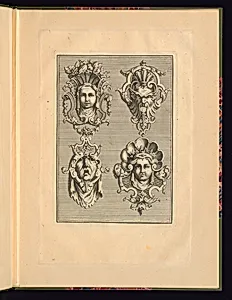
Four Mask Designs
Classification
Department
Smithsonian Collection
Museum
Smithsonian American Art Museum
Credit
Purchased for the Museum by the Advisory Council
Accession Number
1921-6-520-4
Rights
Public Domain
About this artwork
Research in Progress
Art Historical Context
### Four Mask Designs Johann Leonhard Eis, a German artist (1672–1733), created *Four Mask Designs* around 1720–25, during the late Baroque era opulent theater and festive traditions flourished across Europe. This print, now in the Smithsonian American Art Museum's collectionpurchased by the Advisory Council), capturesler's skill in designing masks—likely for theatrical performances, carnivals, or court masques. These enigmatic faces embody the period's dramatic exaggeration, blending fantasy with human expression to enhance stage illusions. As a print, the work highlights the era's innovative use of reproductive techniques like etching or engraving, which allowed designers to share intricate patterns widely among artisans and performers. Masks held cultural weight in 18th-century Germany, symbolizing disguise, satire, and social commentary during events like Fasching festivals. Eisler's compositions invite viewers to ponder the artistry behind hidden identities. Research on this piece is ongoing, adding to its allure as a window into Baroque visual culture. Next time you're near the Smithsonian, seek it out—it's a playful reminder of how art masked the boundaries between reality and revelry! (198 words)