
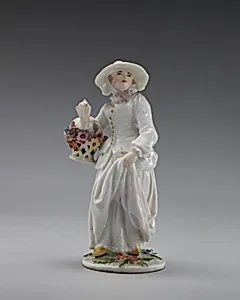
Four Seasons (Spring)
Medium
Soft-paste porcelain
Dimensions
5 1/4 × 3 in. (13.3 × 7.6 cm)
Classification
Ceramics-Porcelain
Culture
British, Chelsea
Department
European Sculpture and Decorative Arts
Museum
Metropolitan Museum of Art, New York, NY
Credit
Gift of Irwin Untermyer, 1964
Accession Number
64.101.456
Rights
Public Domain
Tags
Art Historical Context
**Four Seasons (Spring)**, produced by the Chelsea Porcelainufactory between 1753 and 1755, exemplifies the golden age of British porcelain making. This delicate soft-paste porcelain figure, standing just 5¼ × 3 inches, captures the essence of spring through a graceful female form adorned with flowers and leaves—hallmarks of the Rococo style that emphasized ornate natural motifs and playful elegance. Chelsea, one of England's pioneering porcelain factories established in London around 1743, specialized these intimate sculptural groups, rivaling Meissen wares from Germany. Soft-paste porcelain, Chelsea's signature medium, was a clever British innovation blending clay, ground glass, and soapstone to mimic the prized hard-paste porcelain from China. Fired at lower temperatures, it allowed for finer detailing and vibrant overglaze colors, making pieces like this ideal for affluent 18th-century tabletops. As part of a "Four Seasons" series, **Spring** reflects the era's fascination with allegorical seasons personified as women, symbolizing renewal and the cyclical beauty of nature. Today, housed in the Metropolitan Museum of Art's European Sculpture and Decorative Arts collection (gift of Irwin Untermyer, 1964), this charming figurine offers a window into Georgian luxury and the technical artistry that put British ceramics on the world stage. Visitors can't help but admire its whimsical poise!
About the Artist
Chelsea Porcelain Manufactory · 1744–1784
**Chelsea Porcelain Manufactory** The Chelsea Porcelain Manufactory, Britain's pioneering porcelain enterprise, was founded around 1743 in Chelsea, London, by two Huguenot silversmiths: Nicholas Sprimont from Liège and Charles Gouyn. Sprimont, trained in Paris as a goldsmith before immigrating to England, brought his expertise in luxury metalwork to the venture, while Gouyn handled early sales th...