
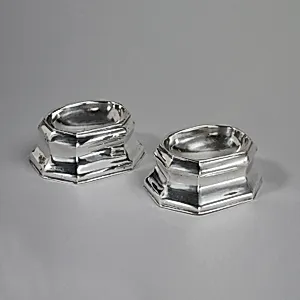
Four Trencher Salts
Classification
metalwork
Department
Smithsonian Collection
Museum
Smithsonian American Art Museum
Credit
Gift of Mr. and Mrs. William M. Cahn, Jr. in memory of Rosalie S. and William M. Cahn
Accession Number
1981-49-21-a/d
Rights
Public Domain
About this artwork
Research in Progress
Art Historical Context
**Four Trencher Salts *James Rood, English active 1710–8, 1722* Silver (likely), Smithsonian American Art Museum Step into the refined world of 18th English dining with James Rood's *Four Trencher Salts*, examples of period metalwork. Crafted around 1722 by this London silversmith, these small, elegant salt cellars were designed for placement beside wooden trenchers—simple platters used for serving food before modern plates became widespread. In an era when salt symbolized wealth and hospitality, such pieces were essential tableware for affluent households, highlighting the host's status during elaborate meals. Rood, active in the early 1700s, exemplified the craftsmanship of English silversmiths influenced by Queen Anne and early Georgian styles, characterized by graceful forms and functional beauty. Though research on this set is ongoing, its survival speaks to the enduring appeal of silver's luster and durability. Donated to the Smithsonian American Art Museum by Mr. and Mrs. William M. Cahn, Jr., in memory of Rosalie S. and William M. Cahn, these salts offer a tangible link to colonial-era transatlantic tastes, bridging British artistry with American collections. (178 words)