
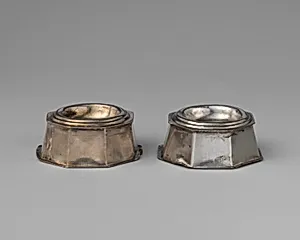
Pair of miniature saltcellars
ca. 1727
Medium
Silver
Dimensions
Each: 9/16 × 1 1/4 in. (1.4 × 3.2 cm)
Classification
Metalwork-Silver-Miniature
Culture
British, London
Department
European Sculpture and Decorative Arts
Museum
Metropolitan Museum of Art, New York, NY
Credit
The Joseph M. and Aimee Loeb May Collection, 1963
Accession Number
63.53.161, .162
Rights
Public Domain
Art Historical Context
This exquisite pair of miniature saltcellars, crafted in silver by the London maker R.G. around 1727, exemplifies the pinnacle of early Georgian metalwork. Measuring just 9/16 × 1 1/4 inches each, these diminutive treasures were likely created for dollhouses, cabinet displays, or as playful novelties for affluent households. Salt, a precious commodity in the 18th century, symbolized, and even in miniature form, these cellars reflect the opulence of British elite dining culture during the reign of George I. Hallmarked for London silver purity and craftsmanship, the pieces showcase the era's masterful techniques, such as chasing and engraving, which demanded extraordinary precision on such a tiny scale. Produced in the bustling workshops of London's silversmiths, they highlight the city's dominance in decorative arts, blending functionality with artistic finesse. Today, housed in The Metropolitan Museum of Art's European Sculpture and Decorative Arts Department as part of The Joseph M. and Aimee Loeb May Collection (1963), they invite us to marvel at the skill that turned everyday luxury into enduring miniature art.