
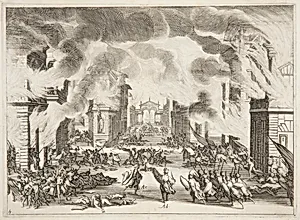
Fourth Act of Soliman
Medium
theater
Classification
theater
Department
Smithsonian Collection
Museum
Smithsonian American Art Museum
Credit
Museum purchase through gift of Mrs. William G. Fitch
Accession Number
1962-192-4
Rights
Public Domain
About this artwork
Research in Progress
Art Historical Context
Jacques Callot's *Fourth Act of Soliman* (0) offers a captivating glimpse into the extravagant world of early 17th-century European theater. The French artist, born in 1592 and renowned until his death in 1635, was a printmaker whose intricate etchings often documented grand spectacles for royal courts, particularly the Medici in Florence. This work, classified as theater and now housed in the Smithsonian American Art Museum's Smithsonian Collection (museum purchase through the gift Mrs. William G. Fitch), likely depicts a costume design, set element, or scene from the fourth act of a production centered on Soliman—possibly alluding to the Ottoman sultan Suleiman the Magnificent in a lavish Baroque-era play or ballet. Callot's signature style shines through in his meticulous attention to detail, using fine lines and dynamic compositions to evoke movement and opulence. His theatrical works bridged art and performance, preserving ephemeral court entertainments for posterity and influencing the development of scenic design during the Baroque period. Though research on this piece is ongoing, it exemplifies how artists like Callot elevated theater into high art, blending historical drama with fantastical costumes. This artifact invites us to imagine the roar of applause in candlelit halls, highlighting theater's role in cultural diplomacy and spectacle across Renaissance courts. A true gem for lovers of performance history!