
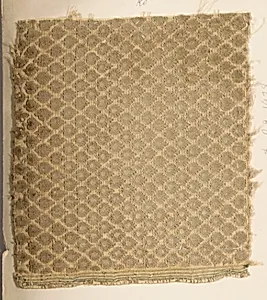
Fragment
Unknown Artist
16th century
Medium
Silk, metal thread
Dimensions
Overall: 7 1/4 x 8 1/4 in. (18.4 x 21 cm)
Classification
Textiles-Velvets
Culture
Italian
Department
European Sculpture and Decorative Arts
Museum
Metropolitan Museum of Art, New York, NY
Credit
Gift of Nanette B. Kelekian, in honor of Olga Raggio, 2002
Accession Number
2002.494.100
Rights
Public Domain
Art Historical Context
This exquisite *Fragment* from 16th-century Italy showcases the opulence of Renaissance textile artistry. Crafted from luxurious silk with intricate metal threads, likely gold or silver, this small velvet piece (7 1/4 x 8 1/4 in.) exemplifies the technical mastery of Italian weavers. Velvets like this were produced in weaving centers such as Venice,, and Genoa, where artisans created cut-pile fabrics with raised patterns that caught the light, enhanced by metallic brocading for a shimmering effect. In the Renaissance era, such textiles held immense cultural and economic significance, adorning ecclesiastical vestments, noble garments, and palatial furnishings. They symbolized wealth and status, often exported across Europe, blending artistic innovation with trade prowess. The use of metal threads not only added durability and luster but also evoked the era's fascination with antiquity and splendor, echoing Byzantine and Islamic influences adapted into Italian styles. Today, preserved as a generous gift to the Metropolitan Museum of Art in 2002, this fragment invites us to marvel at the fragility and brilliance of these vanished luxuries, offering a tactile glimpse into Italy's golden age of decorative arts.