
Fragment
Unknown Artist
18th century
Medium
Silk, metal thread
Dimensions
15 × 4 3/4 in. (38.1 × 12.1 cm)
Classification
Textiles-Woven
Culture
Italian
Department
European Sculpture and Decorative Arts
Museum
Metropolitan Museum of Art, New York, NY
Credit
Gift of Nanette B. Kelekian, in honor of Olga Raggio, 2002
Accession Number
2002.494.359
Rights
Public Domain
Tags
Art Historical Context
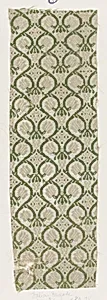
This delicate 18th-century Italian fragment, woven from silk and shimmering metal threads, captures the opulence of Baroque-era craftsmanship. Measuring just 15 × 4¾ inches, it likely originated as part of a larger luxury item, such as ornate furnishings, ecclesiastical vestments, or high-fashion garments. The floral motifs, suggested by its tags, evoke the lavish naturalism popular in Italian decorative arts during this period, where blooming flowers symbolized abundance and vitality. The use of metal threads—often gold or silver—elevates this woven piece, a technique known as lampas or brocading, which created a rich, reflective surface that caught the light in grand palaces and churches. Italian silk centers like Genoa and Venice were renowned for such innovations, blending fine silk warps with metallic wefts to produce textiles that rivaled painting in their intricacy and expense. Though the artist remains unknown, this fragment exemplifies the anonymous mastery of Europe's weaving guilds. Now housed in the Metropolitan Museum of Art's European Sculpture and Decorative Arts Department—thanks to a 2002 gift honoring curator Olga Raggio—it offers a tangible glimpse into Italy's textile heritage, reminding us how everyday luxury wove beauty into daily life.