
Fragment
Unknown Artist
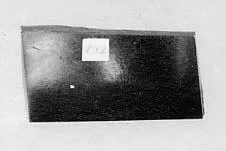
Medium
Nephrite
Dimensions
H. 1 3/4 in. (4.4 cm); W. 3 1/4 in. (8.3 cm); Th. 7/8 in. (2.2 cm)
Classification
Jade
Culture
Russia (Siberia)
Department
Asian Art
Museum
Metropolitan Museum of Art, New York, NY
Credit
Gift of Heber R. Bishop, 1902
Accession Number
02.18.132
Rights
Public Domain
Art Historical Context
This delicate fragment of nephrite jade, originating from Siberia in Russia, invites us into the ancient world of one of Asia's most revered materials. Measuring just 1¾ inches high, 3¼ inches wide, and ⅞ inch thick, its compact form hints at a larger object—perhaps a tool, ornament, or ritual item—crafted with precision from this exceptionally tough variety of jade. Nephrite prized for its durability and luminous translucency, has been worked across Asia for millennia, symbolizing strength and purity in many cultures. Housed in the Metropolitan Museum of Art's Asian Art Department and classified simply as "Jade," this piece reflects Siberia's rich tradition of jade carving, linked to indigenous peoples who harnessed local deposits near Lake Baikal. Though the artist and exact date remain unknown, the fragment's survival speaks to nephrite's resilience, often outlasting softer stones. Donated in 1902 by collector Heber R. Bishop, it joins a storied collection that highlights jade's cross-cultural allure. Even in its incomplete state, this artifact sparks curiosity about Siberian craftsmanship, reminding us how fragments preserve echoes of forgotten hands and histories.