
Fragment
Unknown Artist
14th–15th century
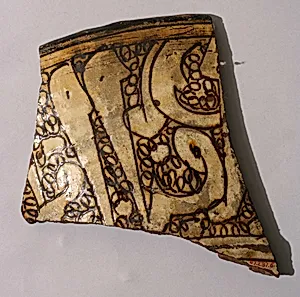
Medium
Earthenware; incised decoration through a white slip and coloring under transparent glaze
Classification
Ceramics
Department
Islamic Art
Museum
Metropolitan Museum of Art, New York, NY
Credit
Rogers Fund, 1907
Accession Number
07.237.6
Rights
Public Domain
Art Historical Context
This exquisite ceramic fragment, dating to the 14th–15th century, a glimpse into the refined world of Islamic pottery-making. Crafted from earthenware, it exemplifies the sophisticated techniques of the era, where artisans applied a white slip—a liquid clay coating—over the base. They then incised intricate designs through this layer, revealing the reddish body beneath, before adding vibrant colors and sealing it all under a transparent glaze. sgraffito-like method, known as *champlevé* in some traditions, created luminous, multi-hued effects that danced in the light, perfect for vessels, tiles, or architectural decorations. In the Islamic art tradition, such ceramics were prized for their technical innovation and aesthetic harmony, blending functionality with poetic ornamentation. Often inspired by nature—floral motifs, arabesques, or calligraphy—these pieces reflected the cultural flourishing under dynasties like the Timurids or Mamluks, where pottery served as an accessible canvas for artistic expression amid restrictions on figural representation in religious contexts. Acquired through the Rogers Fund in 1907 and now housed in the Metropolitan Museum of Art's Islamic Art Department, this fragment preserves a delicate slice of medieval ingenuity, inviting us to marvel at the anonymous master's skill and the enduring allure of Islamic ceramics.