
Fragment
Unknown Artist
14th–15th century
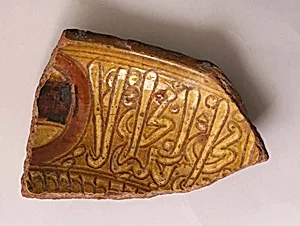
Medium
Earthenware; incised decoration through a white slip and coloring under transparent glaze
Classification
Ceramics
Department
Islamic Art
Museum
Metropolitan Museum of Art, New York, NY
Credit
Rogers Fund, 1907
Accession Number
07.238.37
Rights
Public Domain
Art Historical Context
This delicate earthenware fragment, dating to the 14th–15th century, offers a glimpse into the masterful ceramics of the Islamic world. Housed in the Metropolitan Museum of Art's Department of Islamic Art (acquired through the Rogers Fund in 7), it exemplifies the artistry of Persian or related regional workshops during a golden age of pottery production, possibly under Timurid influence. The piece showcases a sophisticated technique: incised decoration through a white slip—a liquid clay layer—applied over the earthenware body. Vibrant coloring was added to the incisions before a transparent glaze sealed it all, creating luminous depth and contrast. This sgraffito-like method, popular in Islamic ceramics, allowed artisans to blend functionality with beauty, revealing the reddish body beneath for striking visual effects. Though only a fragment survives, it highlights the cultural importance of ceramics in medieval Islamic society. These vessels served everyday needs while adorning homes with intricate patterns, reflecting a blend of technical innovation and aesthetic elegance that influenced global pottery traditions. A true treasure for contemplating lost masterpieces!