
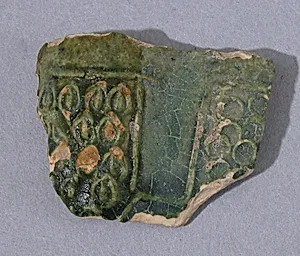
Fragment
Unknown Artist
9th century
Medium
Earthenware; molded decoration, glazed
Classification
Ceramics
Department
Islamic Art
Museum
Metropolitan Museum of Art, New York, NY
Credit
Gift of Mr. and Mrs. Wendell M. Hastings, 1960
Accession Number
60.23.17
Rights
Public Domain
Art Historical Context
This exquisite earthenware fragment, dating to the 9th, offers a glimpse into the early golden age of Islamic ceramics during the Abbasid Caliph. Produced in the Islamic world—likely in regions like Iraq or Persia—such pieces were part of a burgeoning tradition of glazed pottery that transformed everyday objects into works of art. Though only a fragment survives, it exemplifies the technical innovation of the era, when potters began experimenting with durable, vibrant glazes over molded earthenware bodies. The medium reveals sophisticated artistry: earthenware was molded to create raised decorations—possibly floral, geometric, or figural motifs common in early Islamic design—before applying a glossy glaze for both aesthetic sheen and practical waterproofing. This technique marked a departure from earlier unglazed wares, influencing global ceramics for centuries and highlighting Islam's role in advancing pottery as a high art form. Housed in the Metropolitan Museum of Art's Islamic Art Department, this piece was generously gifted by Mr. and Mrs. Wendell M. Hastings in 1960. For visitors, it serves as a tangible link to a time when Islamic artisans blended utility with beauty, their creations adorning homes and mosques across a vast empire.