
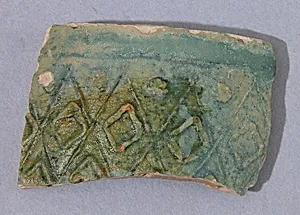
Fragment
Unknown Artist
9th century
Medium
Earthenware; molded decoration, glazed
Classification
Ceramics
Department
Islamic Art
Museum
Metropolitan Museum of Art, New York, NY
Credit
Gift of Mr. and Mrs. Wendell M. Hastings, 1960
Accession Number
60.23.20
Rights
Public Domain
Art Historical Context
This exquisite *Fragment* from the 9th century offers a glimpse into the vibrant world of early Islamic ceramics. Crafted from earthenware and adorned with molded decoration under a glaze, it hails from the Islamic Art collection at the Metropolitan Museum of Art, gifted by Mr. and Mrs. M. Hastings in 0. Dating to a pivotal era in Islamic history—likely the Abbasid Caliphate—this piece reflects the technological and artistic advancements of potters in regions like Iraq or Syria, where ceramics became a canvas for everyday beauty. The molded decoration technique was a hallmark innovation, allowing artisans to create raised, intricate motifs—perhaps floral or geometric patterns—directly in the clay before firing and glazing. Glazing not only sealed the surface for durability and sheen but also enhanced colors, making humble earthenware rival luxury metals or imported Chinese porcelain. This method marked a shift from earlier unglazed wares, showcasing the ingenuity of Islamic craftsmen who elevated pottery to fine art. Though just a fragment, it embodies the cultural flourishing of the Islamic Golden Age, where ceramics bridged utility and ornamentation. Visitors can appreciate how such objects graced homes, mosques, and markets, preserving stories of a sophisticated society through enduring clay.