
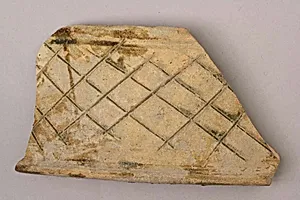
Fragment
Unknown Artist
probably 11th century
Medium
Earthenware; incised and glazed
Classification
Ceramics
Department
Islamic Art
Museum
Metropolitan Museum of Art, New York, NY
Credit
Gift of Mr. and Mrs. Wendell M. Hastings, 1960
Accession Number
60.23.107
Rights
Public Domain
Art Historical Context
Nestled in the Islamic Art at the Metropolitan Museum of Art this enchanting *Fragment* is a testament to the exquisite craftsmanship of 11th-century ceramic artists from the Islamic world. Dating to around that vibrant era—likely from regions like Persia or Central Asia—this earthenware piece was generously gifted by Mr. and Mrs. Wendell. Hastings in 196. Though the full object is lost to time, the surviving portion reveals the sophistication of early Islamic pottery production. The artwork's medium shines through its incised and glazed surface, a technique known as sgraffito. Artisans would apply a contrasting slip (a liquid clay mixture), scratch intricate designs into it with fine tools to expose the underlying body, and then fire it with a glossy glaze for a luminous finish. This method allowed for dynamic patterns—often geometric, floral, or calligraphic—that reflected Islamic artistic principles emphasizing rhythm, repetition, and beauty without overt figuration. Such fragments highlight the cultural zenith of Islamic ceramics, where pottery became a canvas for innovation amid trade routes linking East and West. Imagine potters in bustling workshops, perfecting glazes that mimicked costly Chinese porcelain, making luxury accessible. This modest shard invites us to ponder the anonymous hands that shaped a golden age of artistry.