
Fragment
Unknown Artist
probably 11th century
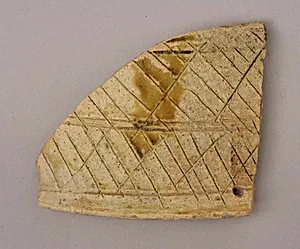
Medium
Earthenware; incised
Classification
Ceramics
Department
Islamic Art
Museum
Metropolitan Museum of Art, New York, NY
Credit
Gift of Mr. and Mrs. Wendell M. Hastings, 1960
Accession Number
60.23.114
Rights
Public Domain
Art Historical Context
This delicate earthenware fragment, likely from the 11th, offers a glimpse into the vibrant of Islamic ceramics during the Islamic Golden Age. Produced in the Islamic world—possibly regions like Iraq, Iran, or Syria—these shards were part of everyday vessels or decorative objects, reflecting the era's advanced pottery traditions amid flourishing trade routes like the Silk Road. The piece showcases incising, a skillful technique where artists carved intricate designs directly into the soft clay before firing. This method created textured, low-relief patterns that caught the light beautifully, often featuring geometric motifs, arabesques, or calligraphy—hallmarks of Islamic art that emphasized harmony and infinity without human figures. Earthenware, fired at lower temperatures than stoneware, was accessible yet allowed for bold experimentation, making ceramics a democratic art form. As a generous gift to the Metropolitan Museum of Art in 1960, this fragment preserves the ingenuity of anonymous artisans whose work influenced global aesthetics. Though small, it whispers stories of cultural exchange and craftsmanship, inviting us to imagine the bustling workshops where such beauty was born.