
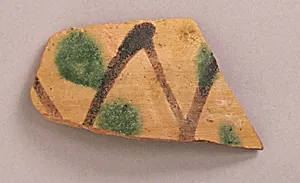
Fragment
Unknown Artist
9th century
Medium
Earthenware; painted and glazed
Classification
Ceramics
Department
Islamic Art
Museum
Metropolitan Museum of Art, New York, NY
Credit
Gift of Mr. and Mrs. Wendell M. Hastings, 1960
Accession Number
60.23.68
Rights
Public Domain
Art Historical Context
This exquisite *Fragment* from the th century exemplifies the early brilliance of Islamic ceramics, crafted from earthenware that has been meticulously painted and glazed. Housed in the Metropolitan Museum of Art's Department Islamic Art, this piece—generously gifted by Mr. and. Wendell M. Hastings 1960—offers a glimpse into the sophisticated pottery traditions of the Abbasid era, when artisans in regions like Iraq and Persia pushed the boundaries of decorative arts. The use of painted and glazed earthenware was revolutionary for its time, providing a durable, shiny surface ideal for vibrant designs that reflected Islamic cultural motifs, though the exact imagery on this fragment remains a tantalizing mystery. Glazing techniques, often involving lead-based slips and mineral pigments fired at high temperatures, not only protected the clay but also created luminous effects that influenced later global ceramics, from Spanish lusterware to Italian maiolica. As a humble yet historically vital survivor, this fragment underscores the Islamic world's role as a crossroads of innovation during the Islamic Golden Age, blending utility with artistry in everyday objects. Visitors are invited to ponder its story, evoking the bustling workshops of medieval Baghdad.