
Fragment
Unknown Artist
probably 13th–14th century
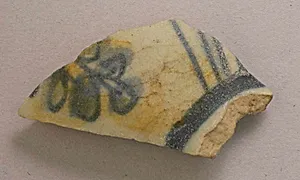
Medium
Porcelain
Dimensions
H. 3/4 in. (1.9 cm) W. 1 1/2 in. (3.8 cm) D. 3/8 in. (1 cm) Wt. 0.1 oz. (2.8 g)
Classification
Ceramics
Department
Islamic Art
Museum
Metropolitan Museum of Art, New York, NY
Credit
Gift of Mr. and Mrs. Wendell M. Hastings, 1960
Accession Number
60.23.91
Rights
Public Domain
Art Historical Context
This delicate porcelain fragment, likely from the 13th14th century, offers a glimpse into the refined ceramic traditions of the Islamic world. just 3/4 inch high and weighing a mere 0.1 ounce, it survives as a tiny testament to the era's masterful craftsmanship. Housed in the Metropolitan Museum of Art's Art Department, it was generously gifted by Mr. and Mrs. Wendell. Hastings in 196. Porcelain, with its translucent, high-fired body, represented a pinnacle of technical achievement, demanding precise control of kilns reaching over 1,200°C. In the medieval Islamic realms—from Persia to the Levant—potters innovated with such materials, often creating vessels for elite households or religious use. Though the exact form and decoration are lost, this shard hints at the vibrant trade networks spanning the Silk Road, where ceramics symbolized luxury and cultural exchange. Even in its fragmentary state, the piece underscores the fragility and enduring allure of Islamic ceramics, inviting us to ponder the hands that shaped it amid the Mongol-era upheavals and golden age of Abbasid legacy. A small survivor, it connects us to artisans whose techniques influenced global pottery for centuries.