
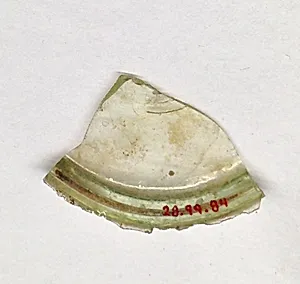
Fragment
Unknown Artist
ca. 1150–ca. 1250
Medium
Glass, ceramic
Dimensions
L. 1 5/8 in. (4.1 cm)
Classification
Glass-Vessels
Culture
European or Middle Eastern
Department
Medieval Art
Museum
Metropolitan Museum of Art, New York, NY
Credit
Gift of Clarence H. Mackay, Archer M. Huntington, Stephen H. P. Pell and Bashford Dean, 1928
Accession Number
28.99.84
Rights
Public Domain
Art Historical Context
This delicate fragment, dating to around 1150–1250, offers a tantalizing glimpse into medieval craftsmanship. Measuring just 1 5/8 inches (4.1 cm) long, it comes from a glass vessel—possibly combined with ceramic elements—and hails from either Europe or the Middle East. uncertain origins reflect the vibrant cultural exchanges of the High Middle Ages, when Crusades and trade routes linked Islamic artisans with European workshops, blending techniques and styles across continents. Glass vessels like this were prized for their translucency and durability, often used for drinking, storage, or display among the elite. Medieval glassmakers employed free-blowing or molding to create thin, elegant forms, sometimes iridescent from natural weathering over centuries. Though small and anonymous, this piece exemplifies the technical sophistication of the era, where glass production thrived in regions like Venice, Syria, and the Rhine Valley. Housed in the Metropolitan Museum of Art's Medieval Art Department, the fragment was generously gifted in 1928 by collectors including Clarence H. Mackay and Archer M. Huntington. It invites us to ponder the daily lives of people 800 years ago, reminding visitors that even broken remnants hold stories of artistry and global connection.