
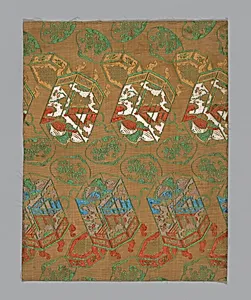
Fragment
18th century, late Edo period (1789–1868)/ Meiji period (1868–1912)
Medium
Plain compound cloth, silk and gilt paper; 2 strips to m.m. (kara ori)
Dimensions
40.6 × 32.1 cm (16 × 12 5/8 in.)
Classification
textile
Department
Textiles
Museum
Art Institute of Chicago
Accession Number
156227
Rights
Public Domain
Art Historical Context
This exquisite textile fragment, hailing from Japan's late Edo period (178–1868) or Meiji era (1868–1912), showcases the masterful craftsmanship of anonymous artisans during a time of cultural transition. Measuring 40.6 × 32.1 cm, it is a plain compound cloth woven from silk threads and delicate gilt paper strips, structured in a "2 strips to m.m." typical of *kara ori*. This technique where thin metallic strips are precisely interlaced with silk, creates a shimmering, luxurious surface that catches the light beautifully—evoking the opulence of elite garments or Noh theater costumes. *Kara ori* weaving represents the pinnacle of Edo-period textile innovation, blending functionality with artistry. The use of gilt paper, a clever and cost-effective alternative to pure gold thread, allowed for radiant effects without excessive weight, making it ideal for flowing robes. As Japan modernized under Meiji rule, such fragments preserve glimpses of traditional methods amid rapid Western influences. Today, at the Art Institute of Chicago's Textiles Department, this piece invites us to appreciate the subtlety of Japanese design—where every thread tells a story of patience, skill, and cultural splendor. (198 words)
About the Artist
Unknown
The artist designated as "Unknown" in our virtual museum's collection exemplifies a poignant chapter in art history: creators whose identities have faded into obscurity despite the enduring power of their work. With only one known artwork attributed to them in our holdings, this figure represents countless anonymous hands that shaped visual culture across centuries. Museums worldwide, including th...