
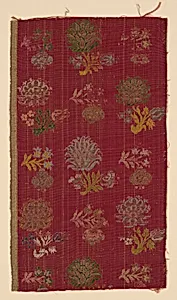
Fragment
1625/75
Medium
Silk, brocade plain compound cloth
Classification
textile
Department
Textiles
Museum
Art Institute of Chicago
Accession Number
1898
Rights
Public Domain
Art Historical Context
This exquisite silk brocade fragment, dating from 1625–1675, offers a glimpse into the lavish textile artistry of the 17th century. As a "plain compound cloth," it exemplifies brocade weaving, a sophisticated technique where multiple sets of warp threads create raised, metallic, or patterned motifs against a smooth ground. Produced on specialized looms, such fabrics were prized for their sheen and durability, transforming simple silk into sumptuous surfaces that caught the light like jewelry. Housed in the Art Institute of Chicago's Textiles Department, this anonymous fragment survives from what was likely a larger garment, furnishing, or ceremonial object. During the Baroque era, silk brocades were symbols of wealth and power, traded along global silk routes from Asia to Europe. Weavers in centers like Lyon, Italy, or the Ottoman Empire mastered these methods, blending functionality with opulence—perfect for royal wardrobes or ecclesiastical vestments. Though incomplete, the piece captivates with its tactile elegance, inviting us to imagine the hands that wove it and the lives it adorned. It reminds us how textiles, often overlooked, preserve stories of craftsmanship, commerce, and cultural exchange from centuries past.
About the Artist
Unknown
The artist designated as "Unknown" in our virtual museum's collection exemplifies a poignant chapter in art history: creators whose identities have faded into obscurity despite the enduring power of their work. With only one known artwork attributed to them in our holdings, this figure represents countless anonymous hands that shaped visual culture across centuries. Museums worldwide, including th...