
Fragment
1650/1700
Medium
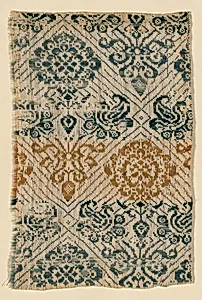
Linen and wool, plain weave with supplementary weft floats
Classification
textile
Department
Textiles
Museum
Art Institute of Chicago
Accession Number
62633
Rights
Public Domain
Art Historical Context
This delicate textile fragment, dating to between 1650 1700, offers a glimpse into the skilled craftsmanship of 17th-century weaving traditions. Housed in the Art Institute of Chicago's Textiles, it exemplifies everyday yet artistry-driven fabric production from an era of expanding global trade and colonial influences. Though its exact origin and creator remain unknown, the piece survives as a testament to the durability of natural fibers—linen for its crisp strength and wool for warmth and texture—commonly used in garments, furnishings, and ceremonial items. The fragment's construction highlights sophisticated techniques: a plain weave foundation provides a sturdy, balanced structure, while supplementary weft floats introduce decorative patterns through extra yarn floats that create raised, tactile motifs without compromising the base cloth. This method allowed weavers to add color and design efficiently, reflecting both practical innovation and aesthetic intent in pre-industrial textile arts. As a preserved remnant, it invites us to ponder the hands that wove it—perhaps in a European workshop or colonial outpost—and its role in daily life or trade. Such fragments are invaluable for understanding how textiles bridged cultures, economies, and histories during the Baroque period's opulent textile boom.
About the Artist
Unknown
The artist designated as "Unknown" in our virtual museum's collection exemplifies a poignant chapter in art history: creators whose identities have faded into obscurity despite the enduring power of their work. With only one known artwork attributed to them in our holdings, this figure represents countless anonymous hands that shaped visual culture across centuries. Museums worldwide, including th...