
Fragment
1625/75
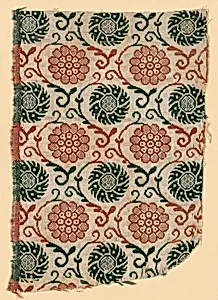
Medium
Linen and wool, plain weave, tied and free double cloth
Dimensions
31.7 × 21.6 cm (12 1/2 × 8 1/2 in.); Repeat: 8.6 × 8.9 cm (3 3/8 × 3 1/2 in.)
Classification
textile
Department
Textiles
Museum
Art Institute of Chicago
Accession Number
62641
Rights
Public Domain
Art Historical Context
This delicate textile fragment, dating to around 1625–1675, offers a glimpse into the masterful weaving traditions of the 17th century. Crafted from linen and wool using a plain weave structure, it exemplifies "tied and free double cloth"—a sophisticated technique where two layers of fabric are woven simultaneously. In tied areas, the layers interlock for strength and durability; in free areas, they separate to create reversible patterns or textures. The modest dimensions (31.7 × 21.6 cm) and repeating motif (8.6 × 8.9 cm) suggest it was once part of a larger garment, furnishing, or ecclesiastical textile, preserved as a testament to everyday artistry. Though the artist remains unknown, this piece highlights the anonymous skill of European weavers during the Baroque era, when textiles were prized for their complexity and versatility. Linen provided a crisp, lightweight base, while wool added warmth and richness, making such fabrics ideal for clothing or interiors amid growing global trade in fibers. Housed in the Art Institute of Chicago's Textiles Department, it invites us to appreciate the ingenuity behind the patterns that adorned 17th-century lives, bridging craft and culture in a single, surviving fragment.
About the Artist
Unknown
The artist designated as "Unknown" in our virtual museum's collection exemplifies a poignant chapter in art history: creators whose identities have faded into obscurity despite the enduring power of their work. With only one known artwork attributed to them in our holdings, this figure represents countless anonymous hands that shaped visual culture across centuries. Museums worldwide, including th...