
Fragment
1000-1476
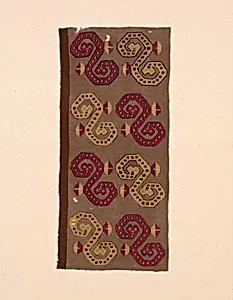
Medium
Cotton and wool (camelid), plain weave with inserts of slit and single dovetailed tapestry weave with interlaced and wrapping outlining wefts
Dimensions
36.2 × 16.5 cm (14 1/4 × 6 1/2 in.)
Classification
textile
Department
Textiles
Museum
Art Institute of Chicago
Accession Number
85242
Rights
Public Domain
Art Historical Context
This exquisite textile fragment, dating from 1000 to 1476, hails from the ancient Andes, where masterful weaving traditions flourished among cultures like the Chimú and early Inca. Crafted from and wool derived from camelids—such as llamas or alpacas—the piece measures a modest 36.2 × 16.5 cm, suggesting it is a surviving remnant of a larger garment, banner, or ritual object. These fibers were ideal for the region's harsh climates, offering durability, warmth, and vibrant dye potential that symbolized status and cosmology. The fragment showcases sophisticated techniques: a plain weave foundation interspersed with slit and single dovetailed tapestry weaves, enhanced by interlaced and wrapping outlining wefts. Slit tapestry creates clean edges by joining motifs without loose threads, while dovetailed weaving interlocks warps for seamless, intricate patterns—methods requiring immense skill on backstrap looms without modern tools. Such innovations highlight the weavers' ingenuity, turning textiles into storytelling canvases of geometric designs, animals, or deities. Preserved in the Art Institute of Chicago's Textiles department, this anonymous masterpiece underscores the cultural pinnacle of Andean textile arts. Before conquest, these fabrics were elite commodities, traded across empires and buried with the dead, offering us a tactile glimpse into pre-Columbian ingenuity and daily life.
About the Artist
Unknown
The artist designated as "Unknown" in our virtual museum's collection exemplifies a poignant chapter in art history: creators whose identities have faded into obscurity despite the enduring power of their work. With only one known artwork attributed to them in our holdings, this figure represents countless anonymous hands that shaped visual culture across centuries. Museums worldwide, including th...