
Fragment
18th century, late Edo period (1789–1868)/ Meiji period (1868–1912)
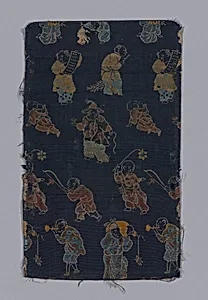
Medium
Plain compound cloth silk.
Dimensions
21.9 × 13.3 cm (8 5/8 × 5 1/4 in.)
Classification
textile
Department
Textiles
Museum
Art Institute of Chicago
Accession Number
88551
Rights
Public Domain
Art Historical Context
This delicate textile fragment, titled *Fragment*, hails from Japan's late Edo period (1789–1868) or early Meiji era (1868–1912), a time of profound transition as the isolated samurai society gave way to rapid modernization and Western influences. Measuring just 21.9 × 13.3 cm, it exemplifies the exquisite craftsmanship of Japanese silk weaving, preserved in the Art Institute of's Textiles Department. Though the artist remains unknown, such fragments often survive from larger kimono panels, obi sashes, or decorative screens, offering a glimpse into everyday luxury and artistic expression. Crafted from plain compound cloth silk, this piece highlights advanced weaving techniques where multiple layers of warp and weft threads interlace to create a structured, durable fabric with a subtle sheen. Silk production thrived in Edo-period Japan, fueled by sericulture innovations and regional guilds, symbolizing status and refinement. The "plain" weave suggests a foundational structure, possibly adorned with motifs now faded, underscoring the era's blend of tradition and emerging industrial methods during Meiji reforms. As a cultural artifact, it reflects Japan's textile heritage—once a major export that bridged East and West. Visitors can appreciate how such small survivals capture the tactile artistry of a bygone age, inviting us to ponder the hands that wove history into thread.
About the Artist
Unknown
The artist designated as "Unknown" in our virtual museum's collection exemplifies a poignant chapter in art history: creators whose identities have faded into obscurity despite the enduring power of their work. With only one known artwork attributed to them in our holdings, this figure represents countless anonymous hands that shaped visual culture across centuries. Museums worldwide, including th...