
Fragment (Border)
18th century
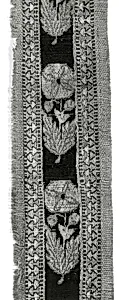
Medium
Brocaded compound cloth
Dimensions
4.1 × 22.8 cm (2 5/8 × 9 in.)
Classification
textile
Department
Textiles
Museum
Art Institute of Chicago
Accession Number
30595
Rights
Public Domain
Art Historical Context
This delicate *Fragment (Border)* from 18th century showcases the exquisite artistry of brocaded compound cloth, a sophisticated textile technique where additional weft threads are woven into a compound structure to create raised, ornamental patterns. Measuring just 4.1 × 22.8 cm, this narrow strip likely served as an elegant border for garments, furnishings, or ecclesiastical vestments, highlighting the era's fascination with opulent decoration. In the 18th century, textiles represented the pinnacle of weaving craftsmanship, often produced in specialized workshops across Europe and beyond. Brocading allowed for intricate motifs—though specifics here are lost to time—to emerge in relief against the ground fabric, blending functionality with luxury. The compound weave, layering multiple sets of warps and wefts, demanded immense skill and time, making these fragments rare survivors of everyday opulence. Today, housed in the Art Institute of Chicago's Textiles Department, this piece invites us to appreciate the unsung labor of anonymous artisans. It whispers of a world where fabric was both canvas and status symbol, bridging art and daily life in the Rococo age of lavish excess.
About the Artist
Unknown
The artist designated as "Unknown" in our virtual museum's collection exemplifies a poignant chapter in art history: creators whose identities have faded into obscurity despite the enduring power of their work. With only one known artwork attributed to them in our holdings, this figure represents countless anonymous hands that shaped visual culture across centuries. Museums worldwide, including th...