
Fragment from the Shoulder of a Tunic (Uncu)
1550-1625
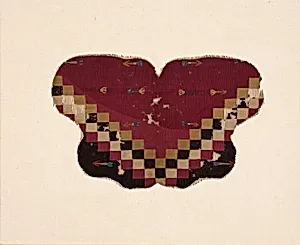
Medium
Cotton and wool (camelid), single interlocking tapestry weave with eccentric wefts
Dimensions
24.8 × 38.7 cm (9 3/4 × 15 1/4 in.)
Classification
textile
Department
Textiles
Museum
Art Institute of Chicago
Accession Number
12829
Rights
Public Domain
About this artwork
This textile was cut from the shoulder area of an Inca or Indigenous man’s tunic, called an uncu in Quechua. The maker wove the cantuta flowers in opposite directions so they would remain upright when the garment was worn. The cascades of rectangles that define the yoke were invented during the Spanish Colonial period, possibly reinventing a style from an earlier regional culture that had been conquered by the Incas. The faint line within the red threads is a diagonal break that reveals the clot...
About the Artist
Inca
Inca artists, operating anonymously within the vast Inca Empire from approximately 1425 to 1532 CE, were masterful creators whose works symbolized imperial power and unity across the Andes. Thriving in the heart of Cuzco, the empire's capital, these skilled artisans—men and women alike—produced textiles, ceramics, and metalwork that served both practical and ceremonial purposes. Gifted craftspeopl...