
Fragment (Furnishing Fabric)
Qing dynasty (1644–1911), 1775/1850
Medium
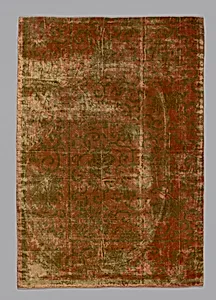
Cut solid satin velvet, silk with orange warp and weft and orange-red and green pile. Design of both field and border is green peony scrolls on red ground. In the field, Buddhist emblem of sonorous stone repeated twice. Green silk lining
Dimensions
86.4 × 59.7 cm (34 × 23 1/2 in.)
Classification
textile
Department
Textiles
Museum
Art Institute of Chicago
Accession Number
12343
Rights
Public Domain
Art Historical Context
This exquisite fragment of furnishing fabric hails from China's Qing dynasty (16441911), likely produced between 1775 and1850 during the prosperous Qianlong or Jiaqing emperor reigns. As a surviving piece from imperial or elite workshops, it exemplifies the era's mastery of silk weaving, used for lavish interiors like curtains, upholstery, or robes. Textiles like this were status symbols, blending artistry with opulence in a period when China's textile trade flourished globally. Crafted from cut solid satin velvet in silk, the fabric features an orange warp and weft with vibrant orange-red and green pile, creating a rich, luminous texture. The design showcases scrolling green peonies on a red ground—a classic motif symbolizing wealth, prosperity, and feminine beauty in Chinese culture—framed by a matching border. At the center, the Buddhist emblem of the sonorous stone (a ritual chime striker) appears twice, evoking harmony, enlightenment, and auspicious protection. Backed with green silk lining, this 86.4 × 59.7 cm piece highlights advanced velvet-cutting techniques that produced a velvety sheen, prized for its tactile luxury. Housed in the Art Institute of Chicago's Textiles Department, this fragment offers a window into Qing opulence, where floral and symbolic designs merged everyday elegance with spiritual depth, delighting collectors today.
About the Artist
Unknown
The artist designated as "Unknown" in our virtual museum's collection exemplifies a poignant chapter in art history: creators whose identities have faded into obscurity despite the enduring power of their work. With only one known artwork attributed to them in our holdings, this figure represents countless anonymous hands that shaped visual culture across centuries. Museums worldwide, including th...