
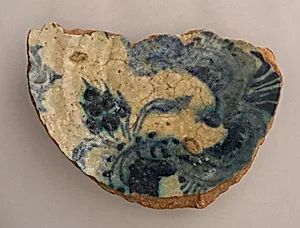
Fragment of a Bowl
Unknown Artist
14th–15th century
Medium
Stonepaste; painted under transparent glaze
Classification
Ceramics
Department
Islamic Art
Museum
Metropolitan Museum of Art, New York, NY
Credit
Rogers Fund, 1908
Accession Number
08.256.143
Rights
Public Domain
Art Historical Context
This exquisite *Fragment of a Bowl*, to the 14th–15th century, offers a glimpse into the golden age of Islamic ceramics from the Middle East, likely Iran or Syria. Crafted during a period of cultural flourishing under dynasties like the Timurids, such pieces were everyday vessels elevated to art through masterful craftsmanship. Though only a fragment survives, it exemplifies the sophistication of Islamic potters who rivaled Chinese porcelain in translucency durability. The medium—stonepaste (or fritware), a composite of quartz, clay, and glass frit—created a white, porcelain-like body ideal for intricate designs. Artists painted motifs under a transparent glaze, firing the piece to fuse colors vibrantly while protecting them from wear. This underglaze technique allowed bold blues, turquoise, and floral patterns symbolizing paradise gardens, blending functionality with poetic beauty in domestic life. Acquired through the Rogers Fund in 1908, this ceramic shard now graces the Metropolitan Museum of Art's Islamic Art department. It reminds us how fragments preserve stories of innovation, trade along the Silk Road, and the enduring allure of Islamic artistry.