
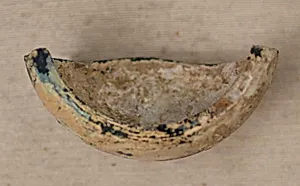
Fragment of a Bowl
Unknown Artist
8th–9th century
Medium
Glass; blown and tooled
Dimensions
H. 1 1/8 in. (2.9 cm) Diam. 2 1/8 (5.4 cm)
Classification
Glass
Department
Islamic Art
Museum
Metropolitan Museum of Art, New York, NY
Credit
Rogers Fund, 1932
Accession Number
32.150.240
Rights
Public Domain
Art Historical Context
This delicate fragment of a bowl, to the 8th–9th, offers a tantalizing glimpse into the refined world of Islamic glassmaking during the Abbasid era. Crafted from glass using blown and tooled techniques, it measures just 1 1/8 inches high and 2 1/8 inches in diameter—small enough to fit in the palm of your hand. through the Rogers Fund in 2, it resides in the Metropolitan Museum of's Islamic Art department, where it exemplifies the everyday elegance of medieval luxury goods. Glassblowing, perfected by Islamic artisans after its Roman origins, involved heating silica to a molten state, blowing it into shape through a tube, and then tooling it with pincers and shears for precise edges and details. This method allowed for thin, lightweight vessels that were both functional and beautiful, often used in households, palaces, or mosques across the vast Islamic world from Syria to Iraq. Though only a fragment survives, it speaks volumes about cultural innovation: Islamic glassworkers were renowned for their technical mastery, producing wares that symbolized prosperity and artistry. Imagine this piece once holding fragrant oils or sweets— a testament to a golden age of creativity that influenced global craftsmanship for centuries.