
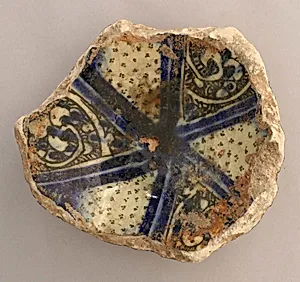
Fragment of a Bowl
Unknown Artist
14th century
Medium
Stonepaste; polychrome painted under transparent glaze
Classification
Ceramics
Department
Islamic Art
Museum
Metropolitan Museum of Art, New York, NY
Credit
Rogers Fund, 1908
Accession Number
08.184.48
Rights
Public Domain
Art Historical Context
This exquisite *Fragment of a Bowl* the 14th century a tantalizing glimpse into the golden of Islamic ceramics. Crafted by an unknown artist, it hails from the Islamic world—likely regions like Syria, Egypt, or Iran under Mamluk or Ilkhanid patronage—where potters mastered stonepaste (also called fritware). This innovative medium, a composite of quartz, glass frit, and clay, was developed around the 12th century mimic the translucency of coveted Chinese porcelain, which Islamic artisans couldn't replicate due to lacking kaolin clay. The bowl fragment showcases a hallmark technique: polychrome painting under a transparent glaze. Vibrant pigments—typically cobalt blue, turquoise, and manganese purple—were applied directly onto the unfired stonepaste body before a clear glaze sealed them, firing at high temperatures to create durable, luminous colors. This underglaze method ensured longevity and brilliance, distinguishing Islamic wares from earlier monochrome styles and influencing later European ceramics. Though only a fragment survives, it embodies the cultural splendor of the medieval Islamic courts, where such vessels graced tables during feasts and symbolized refined artistry. Acquired through the Rogers Fund in 1908, it now resides in the Metropolitan Museum of Art's Islamic Art department, reminding us of the ingenuity behind everyday luxury in a thriving era of cross-cultural exchange.