
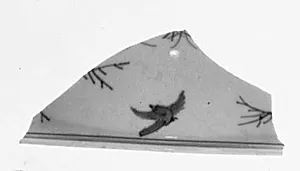
Fragment of a Bowl (Study Collection)
Unknown Artist
16th century
Medium
White porcelain
Dimensions
smallest: 3/4 in. (1.9 cm)–largest: 4 1/2 in. (11.4 cm)
Classification
Ceramics
Culture & Period
China · Ming dynasty (1368–1644)
Department
Asian Art
Museum
Metropolitan Museum of Art, New York, NY
Credit
Gift of Mr. and Mrs. John R. Menke, 1982
Accession Number
1982.464.31
Rights
Public Domain
Tags
Art Historical Context
This delicate fragment of a Ming dynasty, dating to the 16th century, offers a glimpse into China's golden age of porcelain production. Crafted during the Ming period (1368–1644), when imperial kilns at Jingdezhen revolutionized ceramics, these shards—from the smallest at just 3/4 inch to the largest at 4 1/2 inches—belong to a study collection highlighting the era's technical mastery. Pure white porcelain, made from kaolin clay and fired high temperatures, achieved a translucent, ivory-like glow that symbolized purity and refinement in Chinese culture. The fragments likely preserve motifs of birds, a common theme in Ming ceramics evoking nature's harmony, prosperity, and scholarly ideals. Birds such as cranes or phoenixes often adorned wares for the elite, blending poetic symbolism with exquisite underglaze techniques. Though broken, these pieces underscore porcelain's role as a global luxury good, exported along the Silk Road and prized by collectors worldwide. A generous gift to the Metropolitan Museum of Art from Mr. and Mrs. John R. Menke in 1982, this study collection invites visitors to appreciate the artistry in imperfection—remnants of everyday vessels that once graced imperial tables or scholarly studios.