
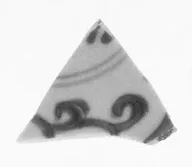
Shard (Study Collection)
Unknown Artist
Medium
Blue-and-white porcelain
Dimensions
smallest: 3/4 in. (1.9 cm)–largest: 4 1/2 in. (11.4 cm)
Classification
Ceramics
Culture & Period
China · Ming (1368–1644)–Qing (1644–1911) dynasties
Department
Asian Art
Museum
Metropolitan Museum of Art, New York, NY
Credit
Gift of Mr. and Mrs. John R. Menke, 1982
Accession Number
1982.464.16
Rights
Public Domain
Art Historical Context
Nestled in the Metropolitan Museum Art's Asian Art department *Shard (Study Collection)* presents a captivating assortment of blue-and-white porcelain fragments from Ming (1368–4) and Qing (1644–1911) dynasties. Ranging from a petite 3/4 inch (1.9 cm) to a more substantial 4 12 inches (11.4 cm), these shards—gifted by Mr. and Mrs. R. Menke in 1982—offer an intimate glimpse into imperial ceramic artistry. Though their exact origins remain unknown, they embody the era's masterful craftsmanship. Blue-and-white porcelain revolutionized Chinese ceramics during the Ming dynasty, with cobalt oxide painted beneath a clear glaze and fired at high temperatures in renowned kilns like Jingdezhen. This technique produced vibrant blues against pristine white, symbolizing purity and elegance. By the Qing period, production scaled for both domestic imperial use and global export, influencing ceramics worldwide through maritime trade routes. Motifs often drew from nature, mythology, and daily life, showcasing painters' precision and potters' skill. As study pieces, these shards invite scholars and visitors to examine subtle details—crackle glazes, brushwork finesse, and shard edges—revealing the technical innovations that made Chinese porcelain a coveted "white gold." They highlight the cultural prestige of these dynasties, bridging artistry and history in this treasured collection.